Will AI Push Software Back Toward Closed Source?
Technology··3 min
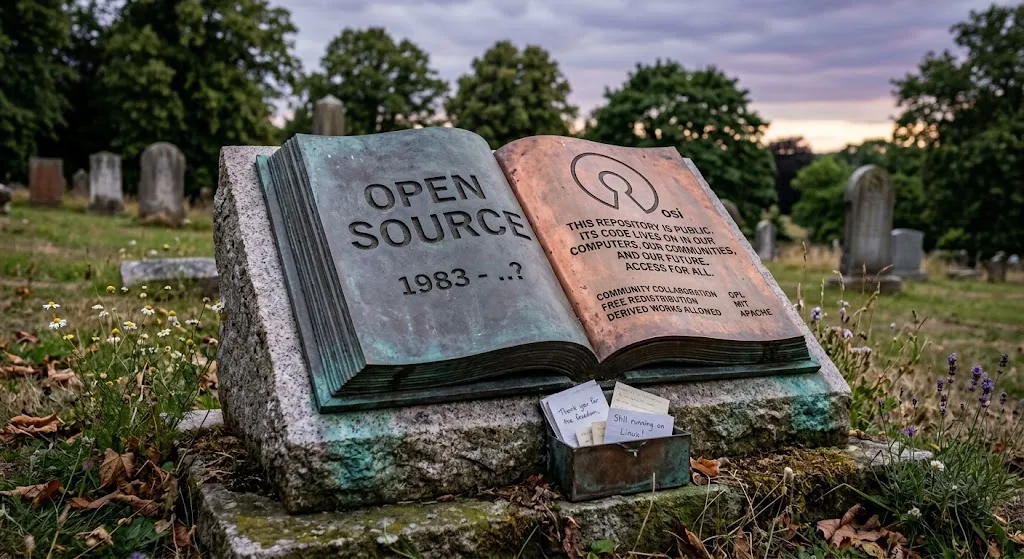
Here’s a prediction that sounds backwards: as AI coding tools get better, more software will go closed source, not open.
You’d expect the opposite. AI lowers the barrier to contributing. It can explain an unfamiliar codebase, write tests, fix bugs. That should strengthen open source, and in many ways it will. But I think it will also push companies, and even some established open source projects, toward keeping more code private.
What prompted me to write this was a post from the GrapheneOS team in September:
Android 17 QPR1 is the first release since Android Honeycomb (3.x) adding new APIs for app developers without a release to the Android Open Source Project. The new APIs are currently exclusive to the Pixel OS and aren't available to other Android OEMs.https://t.co/QBqoAQ2Yte
— GrapheneOS (@GrapheneOS) September 16, 2026
Think about that. Android, one of the most successful open source projects ever, is quietly becoming more closed. Google now pushes Android source to AOSP only twice a year, new APIs and even some security patches ship on Pixels first, and GrapheneOS says it can only keep up by reverse engineering the code. If that’s the direction at Google, it’s worth asking why, and whether AI will accelerate it elsewhere.
Code used to be its own protection
Publishing your source code was never as risky as it sounds, because reading and reproducing a complex system took serious engineering effort. The code was public, but understanding it well enough to compete was expensive.
AI removes much of that cost. If a competitor can point an AI at your repository and get a working understanding of your architecture in days instead of months, publishing your implementation hands them far more than it used to. The code stops being a moat.
Software is the odd one out
Most industries don’t share their implementation. Toyota doesn’t publish its manufacturing processes. A restaurant doesn’t post its recipes. Pharma companies guard their production methods even when the underlying science is public knowledge.
Software developed a different culture, partly because sharing code paid off so well: shared infrastructure, ecosystems, faster progress for everyone. But if AI makes reproducing software cheap, the calculation starts to look more like it does everywhere else. Share what builds an ecosystem, protect what gives you an edge.
Infrastructure stays open, products close up
I don’t think open source is going anywhere. Languages, databases, developer tools, and standards all thrive on large communities, and the network effects of openness outweigh any competitive downside.
The pressure lands on products. A company might happily open source a useful library while keeping the actual product private. Large projects with revenue, employees, and investors will feel it most. We’ve already seen the wave of license changes and source-available models, and AI adds one more reason. The question shifts from “should we open source everything?” to “what exactly should we open source?”
There’s an uncomfortable symmetry here too. The same AI that helps someone contribute a patch also helps someone clone the project without ever joining the community. AI doesn’t distinguish between contributors and competitors.
Maybe the code stops mattering
The more interesting possibility is that source code becomes less important as an advantage at all. If software is cheap to build, the hard-to-copy parts are everything around it: proprietary data, distribution, brand, integrations, operational knowledge, trust.
In that world the real question isn’t “who owns the code?” It’s “what is actually difficult to reproduce?”
My guess: open source keeps winning for infrastructure and standards, while commercially valuable products get more protective of their core. Software spent decades becoming more open. AI may push parts of it back the other way.